Walk Cabrillo Bridge and El Prado
Our pickIn December 1912, crews started work on a bridge across the canyon on the west side of Balboa Park, under the supervision of Frank P. Allen Jr. When they were done, Cabrillo Bridge was the first cantilevered, multiple-arched bridge in Southern California, nearly 1,500 feet long and rising about 120 feet above the canyon. Franklin D. Roosevelt, then Assistant Secretary of the Navy, came out for the dedication on April 12, 1914, the year before the Panama-California Exposition. The exposition was San Diego's celebration of the newly opened Panama Canal, and this bridge was built to carry people into it.
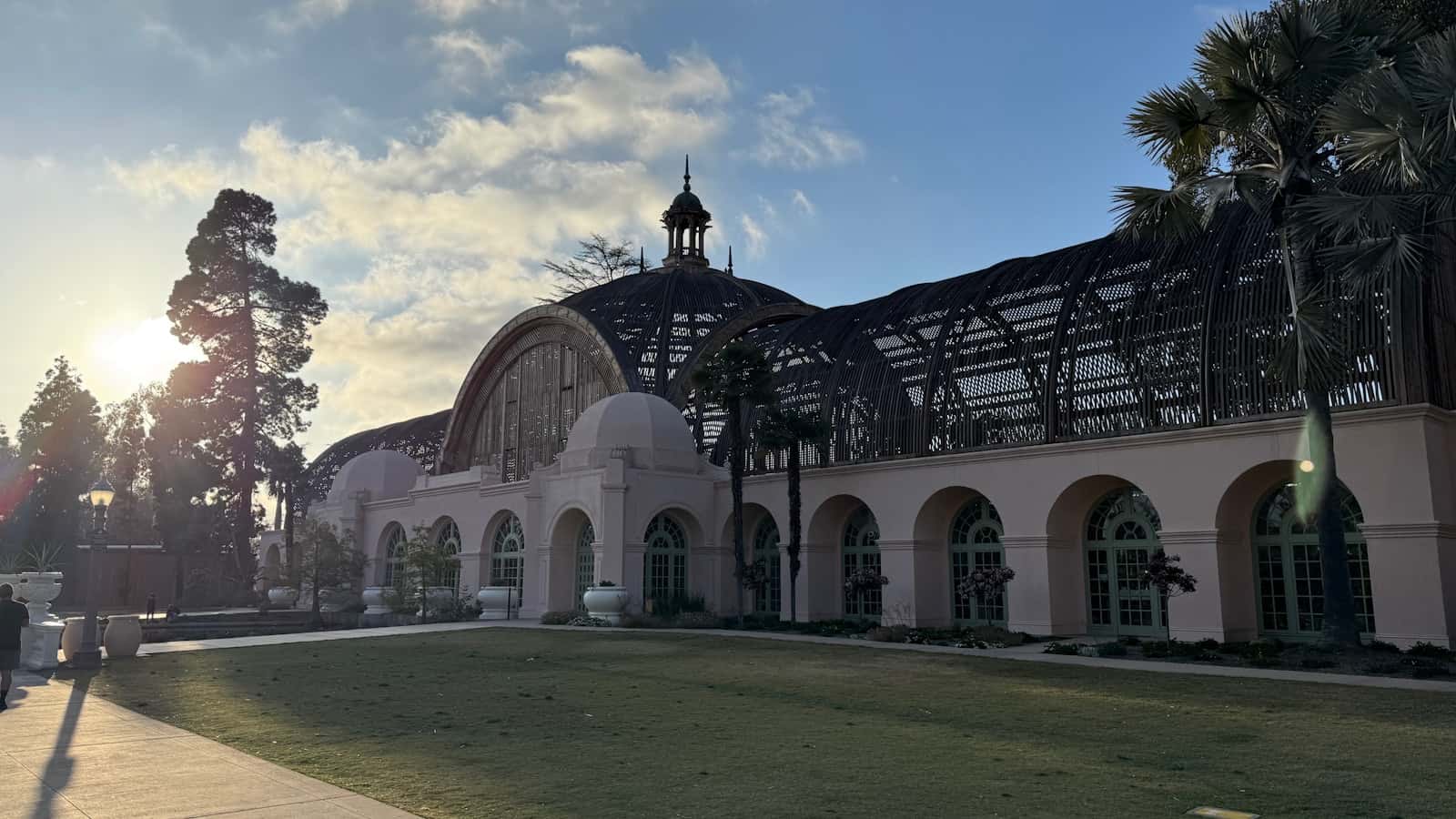
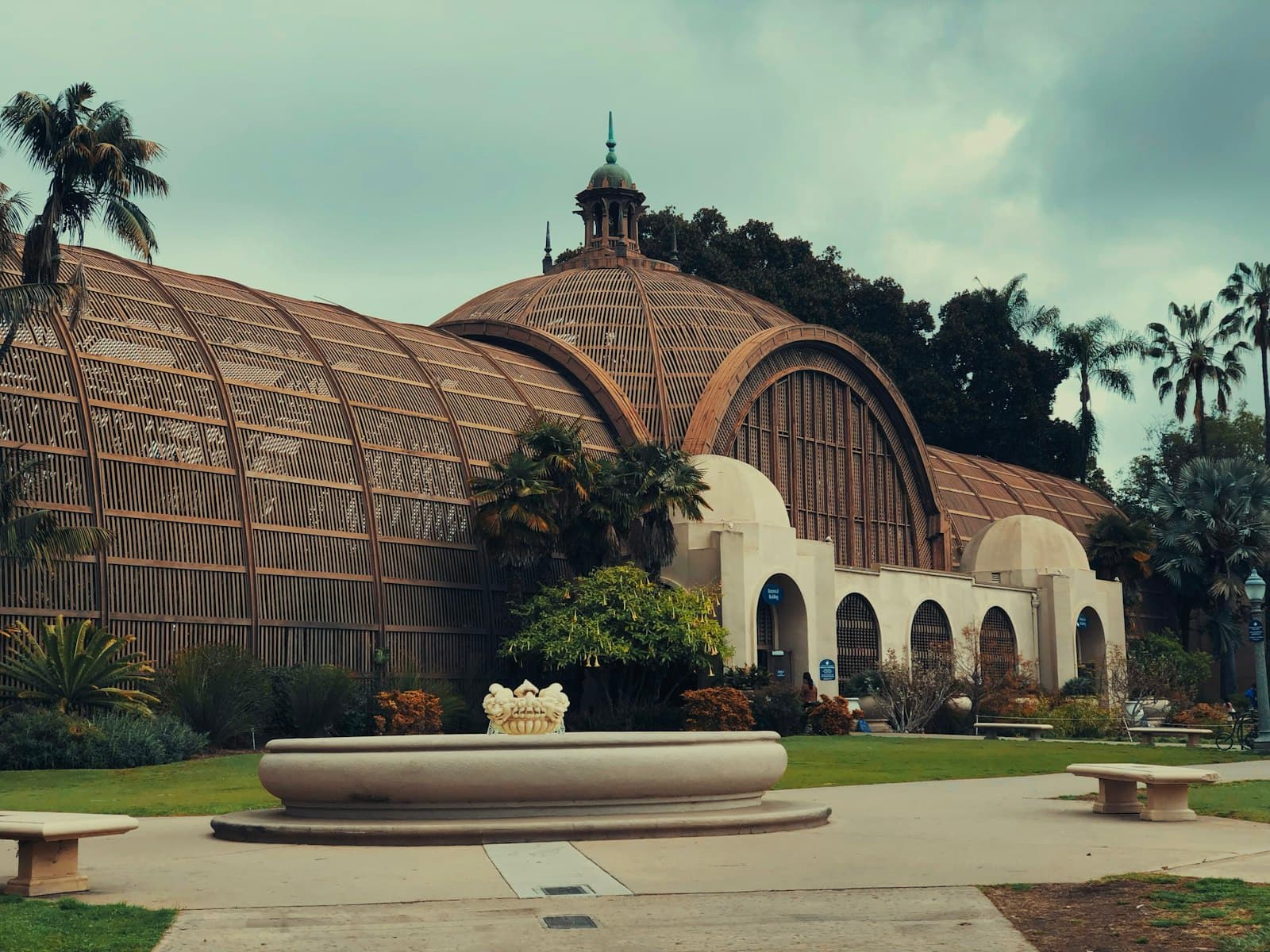
Walking it is still the best first move in the park, and it's free. Start at the west end of the bridge and head east. The bridge leads you straight to the California Tower, El Prado carries you into Plaza de Panama, and the route finishes at the lily pond outside the Botanical Building. Along the way you pass the central gardens and museums you'll be choosing between later, so the walk doubles as a map. Do it before you buy a single ticket.
The look is on purpose. Bertram Goodhue, the exposition's supervising architect, set the Spanish Colonial Revival direction for the fairgrounds, breaking from the Greek and Roman styles earlier expositions had used in favor of Spanish and Mediterranean themes. That Spanish Colonial Revival style still dominates the park, and this walk is the clearest run of it anywhere in Balboa Park. The praise for this walk centers on three things: it costs nothing, the architecture unfolds in a strong sequence, and it's the smartest way to learn the layout.
That's why it's #1. Everything else here is easier to plan once you've done it, and it asks for nothing but comfortable shoes and some daylight. There's no ticket, no time slot and no schedule to build around.
One practical note: cars still cross the bridge and use parts of El Prado, so stay on the walkways, especially with kids in tow.